
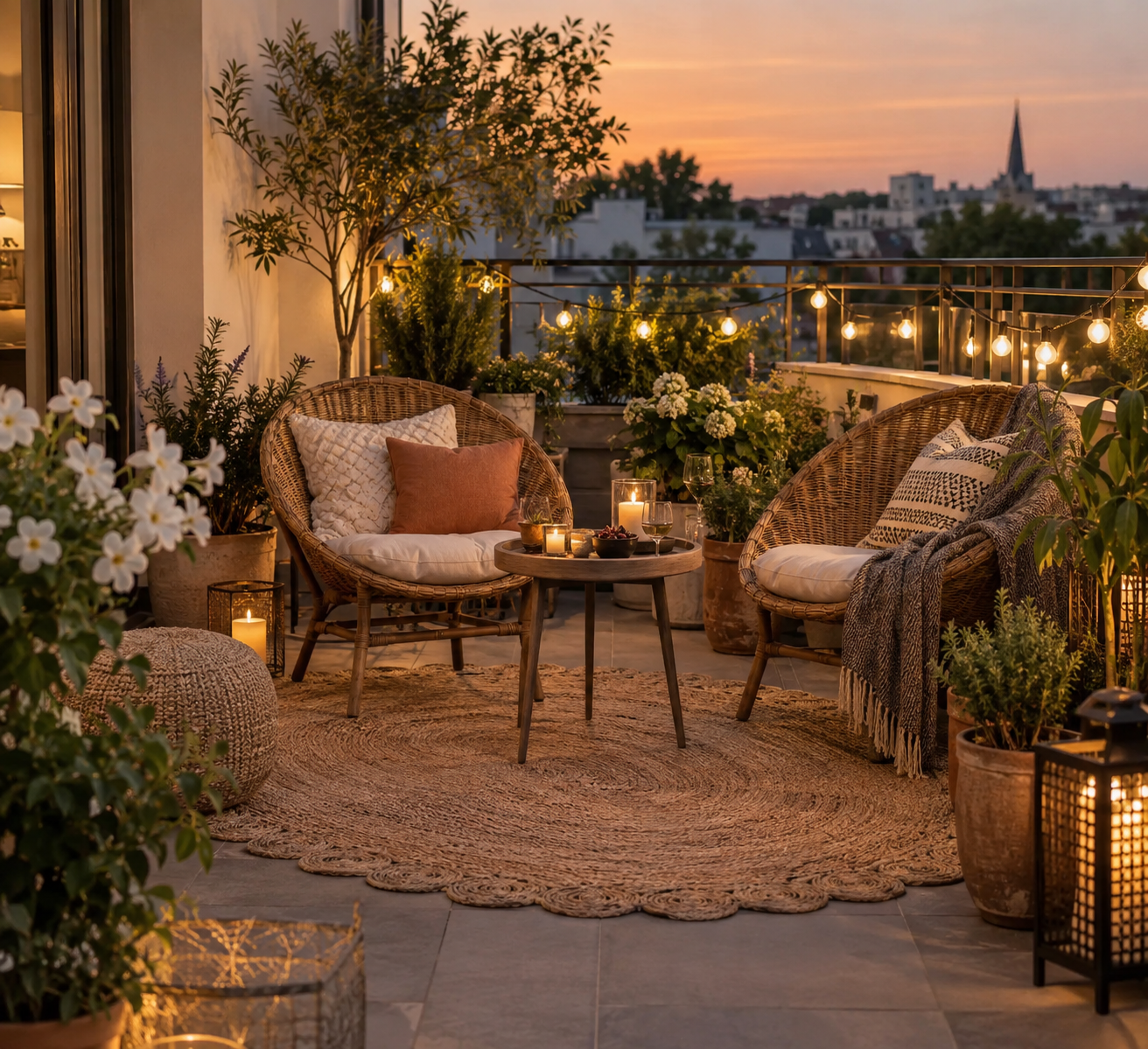
An open terrace is one of the most underused spaces in a home — often left as an empty concrete slab instead of the relaxing outdoor extension it could be. Whether you have a small city apartment terrace, a rooftop space, or a ground-floor patio, the potential is often the same: an outdoor room waiting to happen. If you’re looking for open terrace decor ideas, the good news is that even a small, simple terrace can be transformed into a genuine retreat with a few intentional choices — no full renovation required.
In this guide, we’ll walk through practical, budget-conscious ways to bring warmth, function, and style to your terrace, along with common mistakes to avoid and answers to the questions people ask most often when planning this kind of space.
Why Terraces Get Overlooked
Terraces often fall into a strange in-between category in home design. They’re not quite “indoors,” so they don’t get the same styling attention as a living room. But they’re also not a full garden, so they don’t get the landscaping attention of a backyard. The result is that many terraces end up as storage space for bikes, unused furniture, or nothing at all.
The good news is that this in-between status also means terraces are one of the most rewarding spaces to improve — a little intentional effort goes a long way, because the starting point is usually so bare.
1. Define the Space with an Outdoor Rug
An outdoor-rated rug is one of the fastest ways to visually transform a terrace. It instantly signals “living space” instead of “leftover concrete,” the same way a rug does in an indoor room.
Choose a rug material specifically rated for outdoor use — polypropylene and treated polyester are common choices because they resist moisture, mildew, and fading from sun exposure. Avoid indoor rugs, even attractive ones, since they’ll degrade quickly outside.
Size matters here too: a rug that’s too small will look like an afterthought. As a general rule, your rug should be large enough that your seating furniture’s front legs rest on it, which visually anchors the whole seating area as one cohesive zone rather than furniture floating in empty space.
2. Layer in Weather-Resistant Textiles
Once your rug is in place, textiles do the rest of the emotional work. Outdoor cushions, a woven throw, and a few textured pillows make a terrace feel as inviting as an indoor living room.
Look specifically for fabrics labeled “outdoor” or “weather-resistant” — these are typically treated to resist mold, mildew, and UV fading. Regular indoor fabric will absorb moisture and can develop mildew surprisingly fast, especially in humid climates.
A useful trick: bring cushions inside (or into a storage box) during heavy rain or when you know you won’t be using the space for a while. This single habit can double the lifespan of outdoor textiles.
3. Add Layered Lighting, Not Just One Fixture
A single overhead light makes a terrace feel functional but not relaxing — think of the difference between a hospital hallway and a restaurant patio. The difference is almost entirely about lighting layers.
Consider combining:
- String lights along a railing or overhead for ambient, diffused light
- Lanterns or floor lights at ground level for a softer, grounded glow
- A small table lamp (battery or solar-powered, since most terraces don’t have easy outdoor outlets) for functional task lighting near seating
This layered approach — light at multiple heights rather than one central source — is the same principle interior designers use indoors, and it works just as well outside.
4. Bring in Plants of Different Heights
Plants are arguably the single highest-impact, lowest-cost addition to any terrace. But how you arrange them matters as much as which plants you choose.
A mix of tall potted plants, medium shrubs, and low trailing greenery creates depth in a way that a single row of identical planters can’t. Group plants in odd numbers (three or five) rather than even numbers — this is a well-known design principle because odd-numbered groupings tend to look more natural and less rigidly arranged to the human eye.
If you’re working with very limited space, even three plants at different heights (one tall, one medium, one trailing) can create a surprisingly full, layered look.
Low-Maintenance Options for Beginners
If you’re new to keeping plants alive outdoors, look for varieties known for resilience: succulents for sunny terraces, ferns for shadier spots, and herbs like rosemary or thyme, which double as decor and something useful for the kitchen.
5. Choose Furniture That Fits the Actual Footprint
A common and costly mistake is buying a full outdoor sofa set for a small terrace, leaving no room to actually walk or move around comfortably. Before buying anything, measure your terrace and map out a simple layout on paper (or with painter’s tape directly on the floor) to see how much furniture the space can genuinely support.
For tighter spaces, two accent chairs and a small side table often work far better than a bulky sectional. The goal isn’t to fill every inch — it’s to create one comfortable, usable seating zone, even if that means the terrace looks “sparse” by indoor-room standards.
6. Add a Vertical Element
If your terrace is small, going vertical makes a big visual difference without eating into your limited floor space. Consider:
- A trellis with climbing vines (jasmine and climbing roses are popular choices depending on climate)
- A wall-mounted planter or living wall panel
- A tall, narrow plant stand that draws the eye upward
Vertical greenery does double duty: it adds visual interest and can also provide a bit of privacy from neighboring buildings or units, which is a common concern for terrace and rooftop spaces in dense urban areas.
7. Include a Shade Element
Whether it’s a simple umbrella, a retractable awning, or a shade sail, having a shaded spot extends how many hours of the day the terrace is actually comfortable to use — particularly important during peak summer months when direct sun can make a terrace unusable during midday hours.
If a permanent shade structure isn’t possible (common in rental situations), a freestanding umbrella with a weighted base is a flexible, fully reversible option that still makes a real difference.
8. Add a Small Side Table for Function
A drink, a book, a candle, a phone — a small side table beside your seating turns a terrace from “a place to stand” into “a place to actually sit and stay.” This small addition is easy to overlook but often makes the difference between a terrace that gets used daily and one that becomes a storage afterthought again within a few weeks.
9. Use Warm, Natural Materials
Rattan, teak, and woven textures tend to feel more relaxed and terrace-appropriate than sleek metal or glossy plastic furniture, which can feel cold and overly formal for an outdoor retreat. Natural materials also tend to age gracefully outdoors — teak in particular develops an attractive silvery patina over time rather than looking simply “worn.”
If budget is a concern, even one or two natural-material accent pieces (a side table, a single chair) mixed with more affordable pieces can shift the overall feel of the space toward warmth rather than starkness.
10. Keep a Clear Walking Path
Even with all these additions, leave a clear, unobstructed path between the door and the seating area. A terrace that feels crowded loses the relaxed, open quality that makes it appealing in the first place. As a practical guideline, aim for at least 24-30 inches of clear walking space in your main traffic path — enough for one person to comfortably pass through without turning sideways.
Common Terrace Decorating Mistakes to Avoid
Overcrowding with furniture: As mentioned above, more furniture doesn’t equal more style — it often just equals less usable space.
Ignoring weather durability: Beautiful indoor decor items will deteriorate quickly outside. Always check for outdoor-rated materials before buying.
Forgetting about wind: Lightweight decor items (small planters, loose cushions, paper lanterns) can blow away or get damaged on exposed terraces, especially rooftop spaces. Weighted bases and tie-downs are worth the small extra investment.
Skipping a focal point: Every well-designed terrace tends to have one clear “anchor” — a favorite chair, a striking plant, a small water feature — that draws the eye and gives the space a sense of purpose beyond just “outdoor storage with a rug.”
Frequently Asked Questions
How much does it cost to decorate a small terrace?
A basic refresh (rug, cushions, a couple of plants, and simple lighting) can often be done for under $150-$200, especially if you shop sales or secondhand for larger furniture pieces. A more furnished setup with quality outdoor furniture can range higher depending on the pieces you choose.
What plants survive best on an exposed, sunny terrace?
Succulents, lavender, rosemary, and geraniums are generally strong choices for sunny, exposed terraces since they tolerate heat and don’t require constant watering.
Can I decorate a rental terrace without permanent changes?
Yes — nearly every idea in this guide is fully reversible: rugs, freestanding furniture, potted plants, string lights hung with removable clips, and freestanding umbrellas all require no permanent installation or drilling.
Final Thoughts
A terrace doesn’t need a full renovation to feel like an outdoor room — it needs the same layering of texture, light, and greenery that makes any indoor space feel finished. Start with one or two changes (a rug and some plants make the biggest first impact), live with the space for a week or two, and add from there. The goal isn’t to check every item off this list at once — it’s to end up with a terrace you actually want to spend time on.